Text encrypter

Everything the app can do, explained step by step.

Encrypt a text

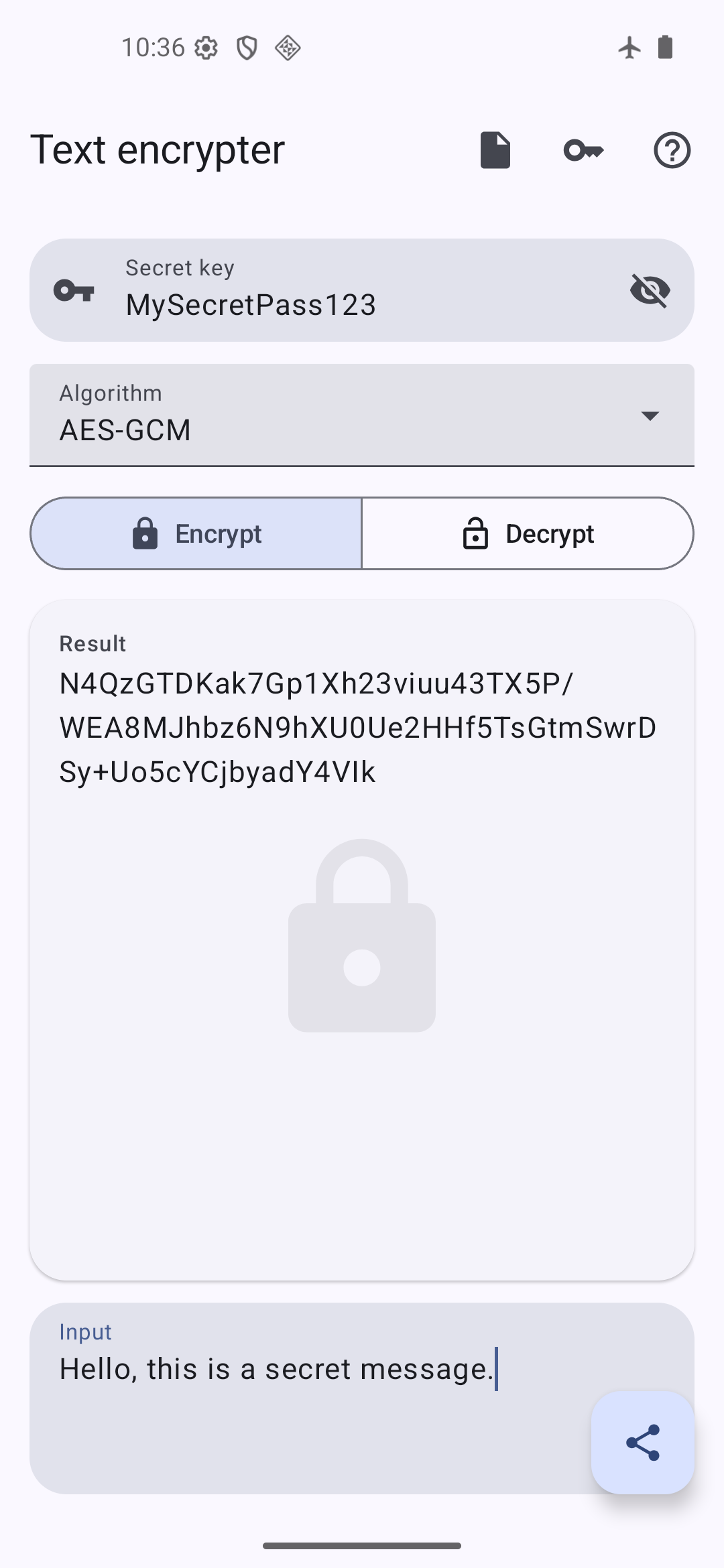
Encrypting a text is like locking it inside a safe. Enter a secret key in the "Secret key" field - any word or phrase works. If you leave it empty, an internal default key is used instead.
Make sure "Encrypt" is selected, shown by the icon, then type or paste your text into the "Input" field at the bottom. The encrypted result appears immediately in the "Result" field above.
Tap the result once to copy it to the clipboard, or press and hold it to share it directly with another app.
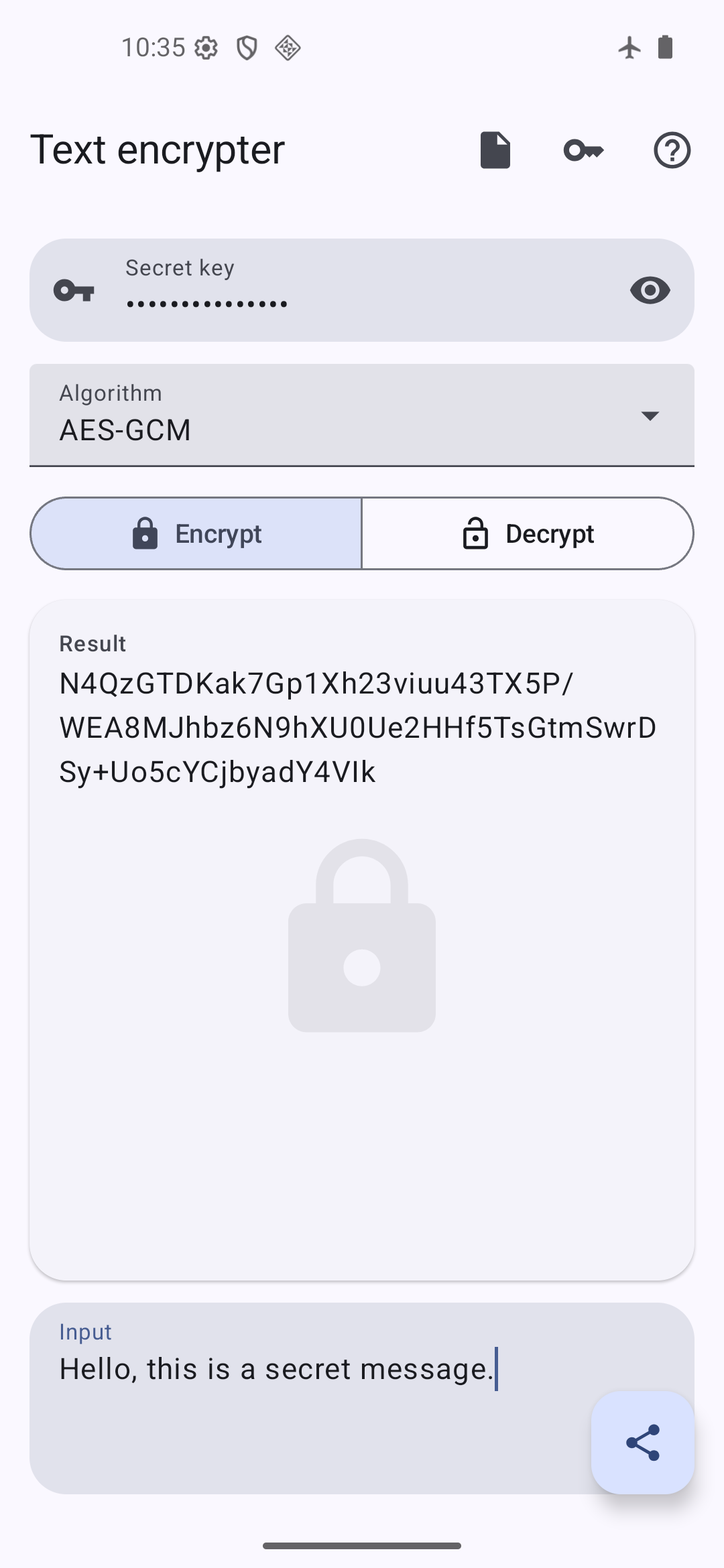
Encrypting a text in Text encrypter

Decrypt a text

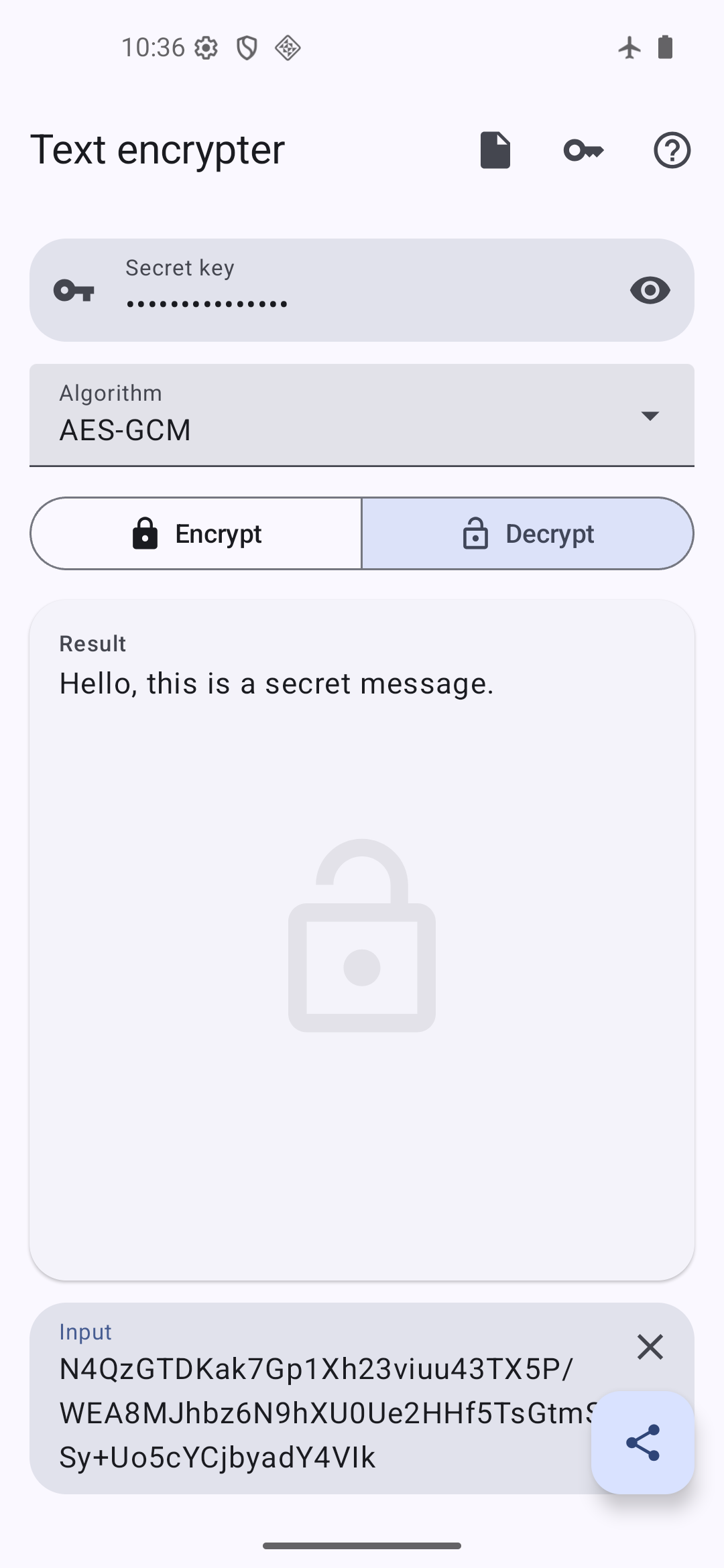
To decrypt a text you need the same secret key it was encrypted with. Tap "Decrypt", shown by the icon - the app automatically swaps the previous result into the input field and shows the decrypted text as the new result.
You can also simply paste an encrypted text you received from someone else into the input field: Text encrypter recognizes AES-GCM and ChaCha20-Poly1305 ciphertext automatically and switches to decrypt mode for you. While a recognized ciphertext is shown, the input field becomes read-only and gets a small button to clear it and start over.

Decrypting a text in Text encrypter

Choosing an algorithm

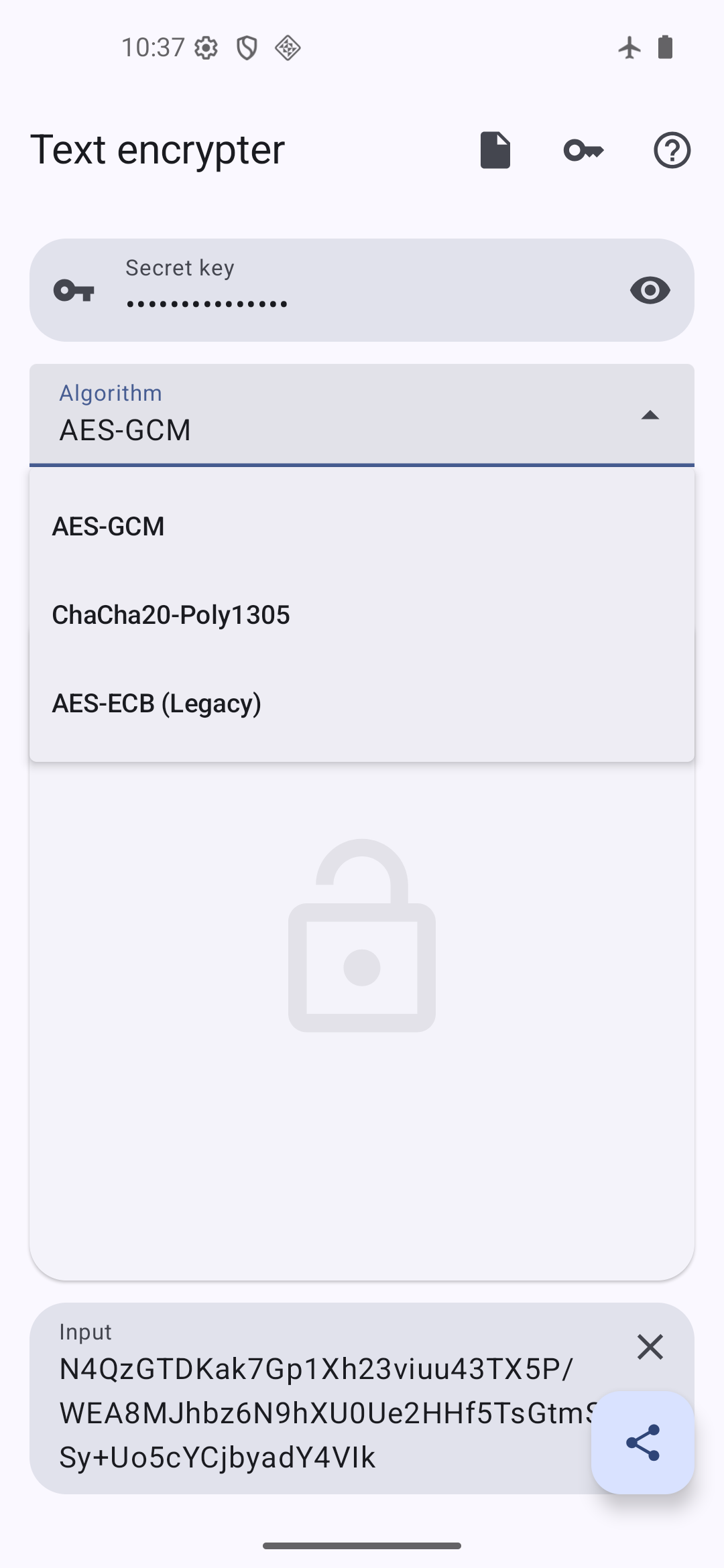
The "Algorithm" field lets you pick which cipher is used:

  • AES-GCM - modern, authenticated encryption. Recommended for most uses.
  • ChaCha20-Poly1305 - another modern, authenticated cipher, a good alternative to AES-GCM.
  • AES-ECB (Legacy) - kept only for compatibility with texts encrypted by very old versions of this app. It has no built-in authentication, so it is never selected automatically - choose it manually only if you specifically need to decrypt an old text.

When pasting or opening ciphertext, Text encrypter automatically tries AES-GCM and ChaCha20-Poly1305 to detect the right one - but never AES-ECB (Legacy), so unrelated text can't accidentally be mistaken for a successful decryption.

Choosing an encryption algorithm

Show, hide and remember your key

Tap the icon next to the "Secret key" field to reveal it in plain text, or tap it again (now shown as ) to hide it behind dots again.
Text encrypter remembers the last key you used between app launches, so you don't have to type it in every time. It is stored encrypted on your device, protected by the Android Keystore, and is never sent anywhere.

Revealing the secret key

The secret key vault

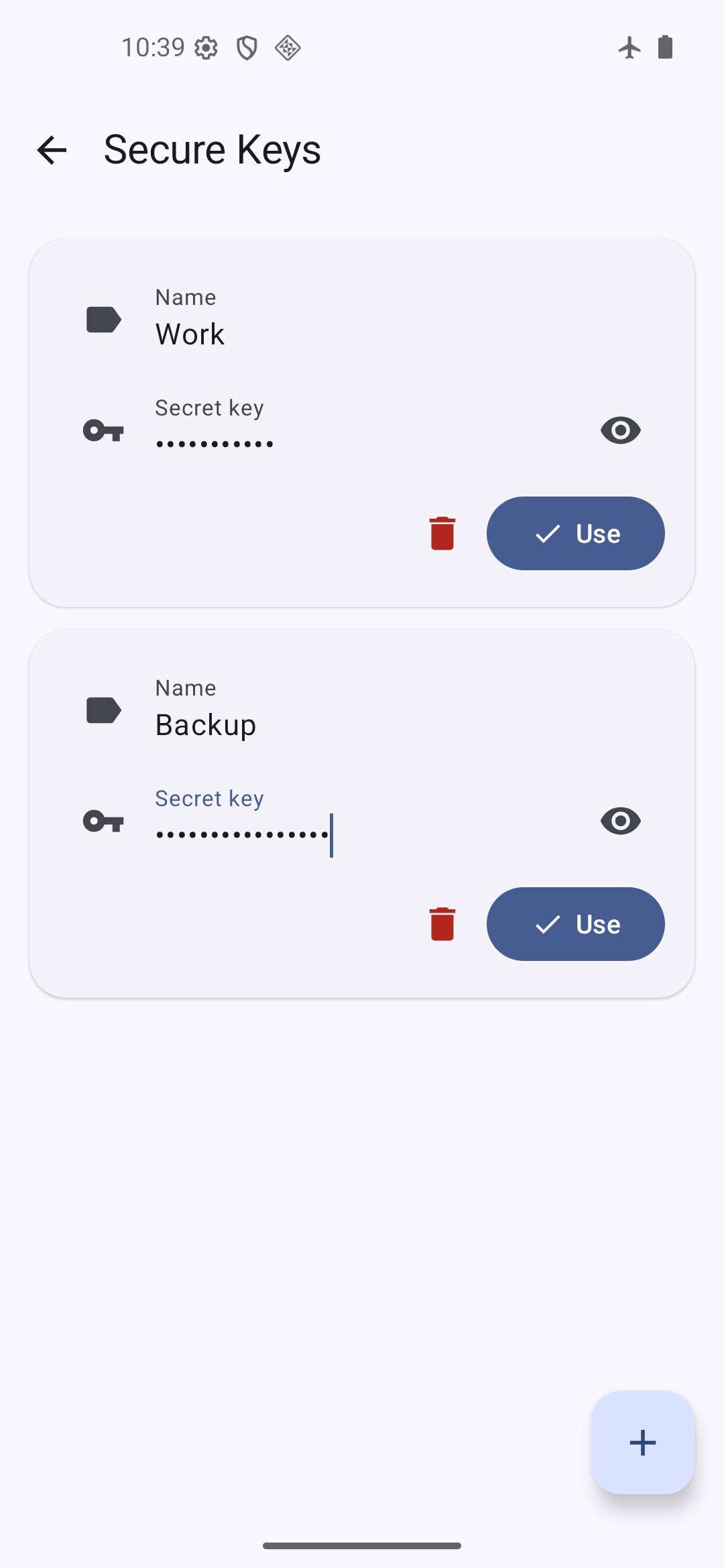
Tap the icon in the top bar to open "Secure Keys" - a vault for storing several named keys, for example one for work and one for private messages.
Tap the button to add a new entry, give it a name and a key, and tap "Use" to apply it as the active key on the main screen. Each entry has its own show/hide toggle and a delete button.

Managing several named secret keys

Files, not just text

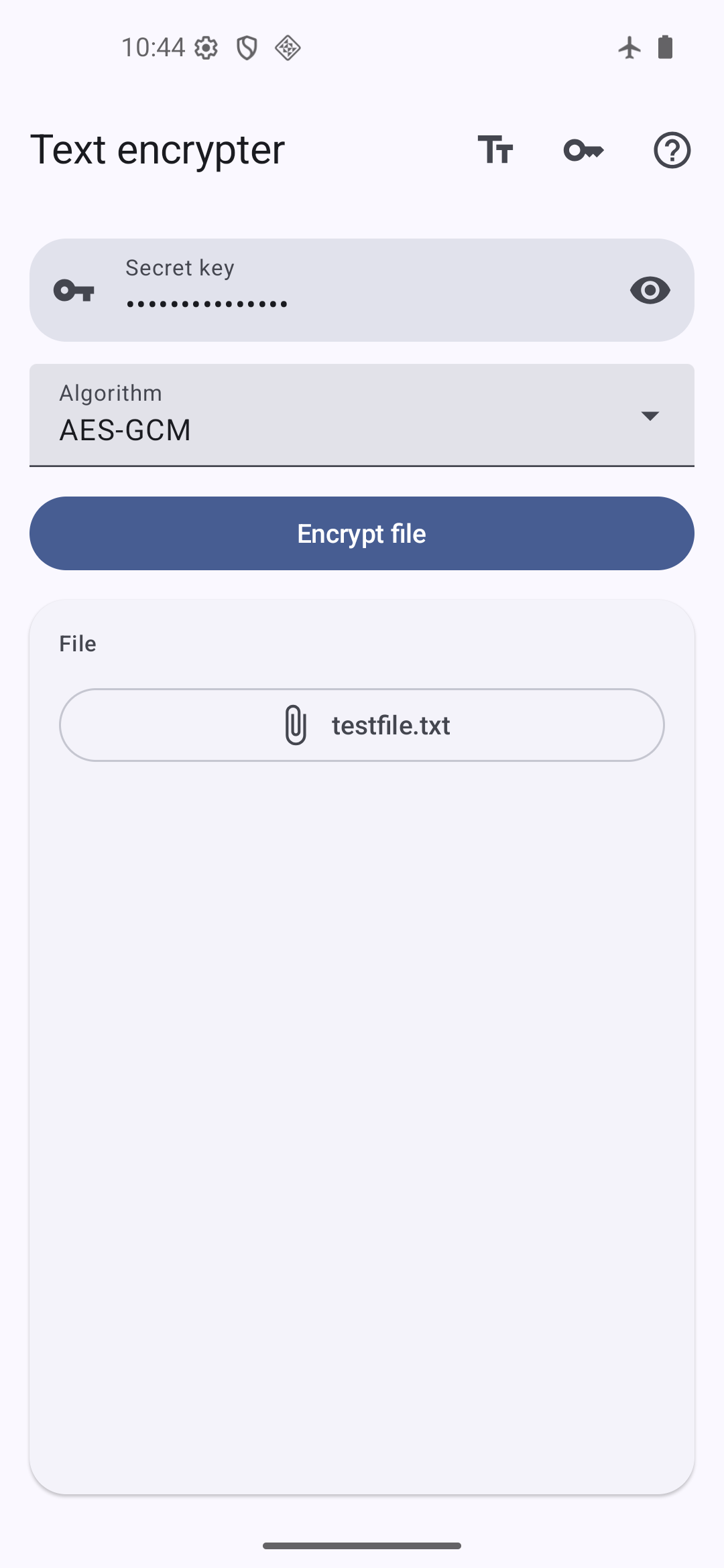
Tap the icon in the top bar to switch the whole screen into file mode (tap it again, now shown as , to switch back to text). Tap "Choose file" to pick any file from your device.
Text encrypter reads just enough of the file to tell whether it is already encrypted - it does not encrypt or decrypt anything yet, and the button label already shows "Encrypt file" or "Decrypt file" accordingly. Only pressing that button actually performs the operation and then asks where to save the result. Afterwards the file selection resets by itself, ready for the next file.

Encrypting a file in Text encrypter

Opening a .enc file from a file manager

Many file managers don't know what to do with an unfamiliar file extension like .enc and refuse to offer any app for it when you tap the file directly. If that happens, use "Share" instead: select the file, tap the share icon, and choose Text encrypter from the list of apps.
The app opens directly in file mode with the file already selected and its mode detected - pressing the button is still required to actually encrypt or decrypt it.

Built with privacy in mind

All encryption and decryption happens entirely on your device - texts, files and keys are never uploaded anywhere. Saved keys are stored using Android's EncryptedSharedPreferences, protected by the hardware-backed Android Keystore.